
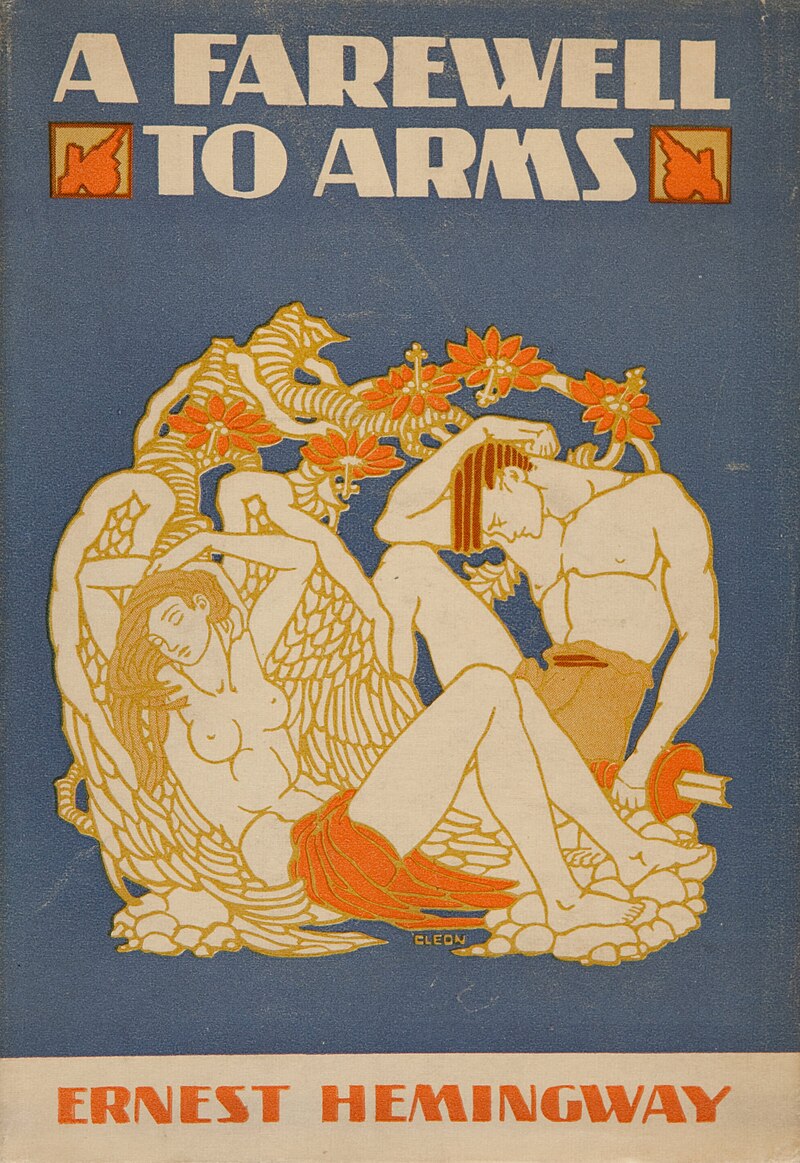
Ernest Hemingway, A Farewell to Arms
"If people bring so much courage to this world the world has to kill them to break them, so of course it kills them. The world breaks every one and afterward many are strong at the broken places. But those that will not break it kills. It kills the very good and the very gentle and the very brave impartially. If you are none of these you can be sure it will kill you too but there will be no special hurry."
27 Quotes
"If people bring so much courage to this world the world has to kill them to break them, so of course it kills them. The world breaks every one and afterward many are strong at the broken places. But those that will not break it kills. It kills the very good and the very gentle and the very brave impartially. If you are none of these you can be sure it will kill you too but there will be no special hurry."
Ernest Hemingway, A Farewell to Arms
"There were many words that you could not stand to hear and finally only the names of places had dignity. Certain numbers were the same way and certain dates and these with the names of the places were all you could say and have them mean anything. Abstract words such as glory, honor, courage, or hallow were obscene beside the concrete names of villages, the numbers of roads, the names of rivers, the numbers of regiments and the dates."
Ernest Hemingway, A Farewell to Arms
"I have noticed that doctors who fail in the practice of medicine have a tendency to seek one another's company and aid in consultation."
Ernest Hemingway, A Farewell to Arms
"It's all nonsense. It's only nonsense. I'm not afraid of the rain. I'm not afraid of the rain. Oh, oh, God, I wish I wasn't.' She was crying. I comforted her and she stopped crying. But outside it kept on raining."
Ernest Hemingway, A Farewell to Arms
"I had gone...to the smoke of cafes and nights when the room whirled and you needed to look at the wall to make it stop, nights in bed, drunk, when you knew that that was all there was, and the strange excitement of waking and not knowing who it was with you, and the world all unreal in the dark and so exciting that you must resume again unknowing and not caring in the night, sure that this was all and all and all and not caring. Suddenly to care very much and to sleep to wake with it sometimes morning and all that had been there gone and everything sharp and hard and clear and sometimes a dispute about the cost. Sometimes still pleasant and fond and warm and breakfast and lunch. Sometimes all niceness gone and glad to get out on the street but always another day starting and then another night. I tried to tell about the night and the difference between the night and the day and how the night was better unless the day was very clean and cold and I could not tell it; as I cannot tell it now. But if you have had it you know."
Ernest Hemingway, A Farewell to Arms
"At night, there was the feeling that we had come home, feeling no longer alone, waking in the night to find the other one there, and not gone away; all other things were unreal. We slept when we were tired and if we woke the other one woke too so one was not alone. Often a man wishes to be alone and a woman wishes to be alone too and if they love each other they are jealous of that in each other, but I can truly say we never felt that. We could feel alone when we were together, alone against the others. We were never lonely and never afraid when we were together."
Ernest Hemingway, A Farewell to Arms
"They questioned us but they were polite because we had passports and money. I do not think they believed a word of the story and I thought it was silly but it was like a law-court. You did not want something reasonable, you wanted something technical and then stuck to it without explanations."
Ernest Hemingway, A Farewell to Arms
"The coward dies a thousand deaths, the brave but one''Of course. Who said it''I don't know.''He was probably a coward,' she said. "He knew a great deal about cowards but nothing about the brave. The brave dies perhaps two thousand deaths if he's intelligent. He simply doesn't mention them."
Ernest Hemingway, A Farewell to Arms
"That was what you did. You died. You did not know what it was about. They threw you in and told you the rules and the first time they caught you off base they killed you. Or they killed you gratuitously like Aymo. Or gave you the syphilis like Rinaldi. But they killed you in the end. You could count on that. Stay around and they would kill you."
Ernest Hemingway, A Farewell to Arms
"Anger was washed away in the river along with any obligation."
Ernest Hemingway, A Farewell to Arms
"I know that the night is not the same as the day: that all things are different, that the things of the night cannot be explained in the day, because they do not then exist, and the night can be a dreadful time for lonely people once their loneliness has started."
Ernest Hemingway, A Farewell to Arms
"The world breaks every one and afterward many are strong at the broken places."
Ernest Hemingway, A Farewell to Arms
"Abstract words such as glory, honor, courage, or hallow were obscene beside the concrete names of villages, the numbers of roads, the names of rivers, the numbers of regiments and the dates."
Ernest Hemingway, A Farewell to Arms
"The world breaks everyone and afterward many are strong at the broken places. But those that will not break it kills. It kills the very good and the very gentle and the very brave impartially."
Ernest Hemingway, A Farewell to Arms
"He said we were all cooked but we were all right as long as we did not know it. We were all cooked. The thing was not to recognize it. The last country to realize they were cooked would win the war."
Ernest Hemingway, A Farewell to Arms
"I had seen nothing sacred, and the things that were glorious had no glory and the sacrifices were like the stockyards at Chicago if nothing was done with the meat except to bury it. "
Ernest Hemingway, A Farewell to Arms
"I did not say anything. I was always embarrassed by the words sacred, glorious, and sacrifice and the expression in vain. We had heard them, sometimes standing in the rain almost out of earshot, so that only the shouted words came through, and had read them on proclamations that were slapped up by billposters over other proclamations, now for a long time, and I had seen nothing sacred, and the things that were glorious had no glory and the sacrifices were like the stock yards at Chicago if nothing was done with the meat except to bury it."
Ernest Hemingway, A Farewell to Arms
"But after I got them to leave and shut the door and turned off the light it wasn't any good. It was like saying good-by to a statue. After a while I went out and left the hospital and walked back to the hotel in the rain."
Ernest Hemingway, A Farewell to Arms
✉️
Get more quotes like Ernest Hemingway, A Farewell to Arms's — every morning.
Join thousands of wisdom seekers getting daily quotes from 300,000+ curated sources.
Free forever. No spam. Unsubscribe anytime.
🎉 Check your inbox to confirm your subscription!