
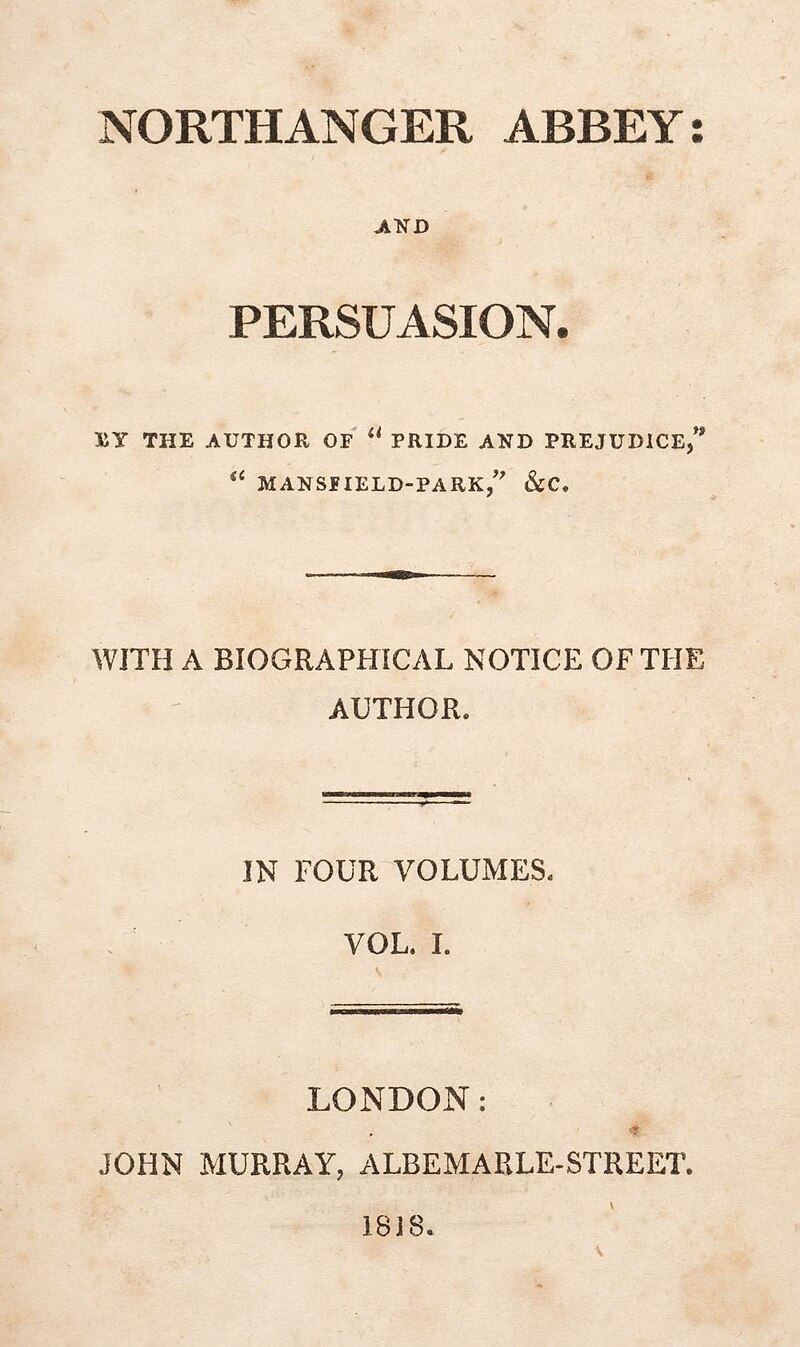
Jane Austen, Northanger Abbey
"The anxiety, which in this state of their attachment must be the portion of Henry and Catherine, and of all who loved either, as to its final event, can hardly extend, I fear, to the bosom of my readers, who will see in the tell-tale compression of the pages before them, that we are all hastening together to perfect felicity."
44 Quotes
"The anxiety, which in this state of their attachment must be the portion of Henry and Catherine, and of all who loved either, as to its final event, can hardly extend, I fear, to the bosom of my readers, who will see in the tell-tale compression of the pages before them, that we are all hastening together to perfect felicity."
"إن القلق الذي لا بد أن يكون نصيب هنري وكاثرين، وكل من أحب أحدهما، في هذه المرحلة من تعلقهما، بشأن مصيرهما النهائي، يكاد لا يمتد، أخشى، إلى صدور قرائي، الذين سيدركون من خلال الانضغاط الواضح للصفحات أمامهم، أننا جميعًا نسارع معًا نحو السعادة التامة."
Jane Austen, Northanger Abbey
"and if a rainy morning deprived them of other enjoyments, they were still resolute in meeting in defiance of wet and dirt, and shut themselves up, to read novels together. Yes, novels; for I will not adopt that ungenerous and impolitic custom so common with novel–writers, of degrading by their contemptuous censure the very performances, to the number of which they are themselves adding — joining with their greatest enemies in bestowing the harshest epithets on such works, and scarcely ever permitting them to be read by their own heroine, who, if she accidentally take up a novel, is sure to turn over its insipid pages with disgust. Alas! If the heroine of one novel be not patronized by the heroine of another, from whom can she expect protection and regard? I cannot approve of it. Let us leave it to the reviewers to abuse such effusions of fancy at their leisure, and over every new novel to talk in threadbare strains of the trash with which the press now groans. Let us not desert one another; we are an injured body. Although our productions have afforded more extensive and unaffected pleasure than those of any other literary corporation in the world, no species of composition has been so much decried. From pride, ignorance, or fashion, our foes are almost as many as our readers. And while the abilities of the nine–hundredth abridger of the History of England, or of the man who collects and publishes in a volume some dozen lines of Milton, Pope, and Prior, with a paper from the Spectator, and a chapter from Sterne, are eulogized by a thousand pens — there seems almost a general wish of decrying the capacity and undervaluing the labour of the novelist, and of slighting the performances which have only genius, wit, and taste to recommend them. “I am no novel–reader — I seldom look into novels — Do not imagine that I often read novels — It is really very well for a novel.” Such is the common cant. “And what are you reading, Miss — ?” “Oh! It is only a novel!” replies the young lady, while she lays down her book with affected indifference, or momentary shame. “It is only Cecilia, or Camilla, or Belinda”; or, in short, only some work in which the greatest powers of the mind are displayed, in which the most thorough knowledge of human nature, the happiest delineation of its varieties, the liveliest effusions of wit and humour, are conveyed to the world in the best–chosen language. Now, had the same young lady been engaged with a volume of the Spectator, instead of such a work, how proudly would she have produced the book, and told its name; though the chances must be against her being occupied by any part of that voluminous publication, of which either the matter or manner would not disgust a young person of taste: the substance of its papers so often consisting in the statement of improbable circumstances, unnatural characters, and topics of conversation which no longer concern anyone living; and their language, too, frequently so coarse as to give no very favourable idea of the age that could endure it."
"وإن حرمهم صباح ممطر من متع أخرى، فقد ظلوا عازمين على اللقاء متحدين البلل والوحل، وانزووا ليقرأوا الروايات معًا. نعم، الروايات؛ فلن أتبنى تلك العادة اللئيمة وغير الحصيفة الشائعة بين كتاب الروايات، وهي الحط من قدر الأعمال التي يضيفون إليها بأنفسهم، بقدحهم وازدرائهم لها – فينضمون إلى ألد أعدائهم في إطلاق أقسى النعوت على هذه الأعمال، وقلما يسمحون لبطلاتهم بقراءتها، فالبطلة التي تصادف رواية ما، لا بد أن تقلب صفحاتها الباهتة باشمئزاز. وا أسفاه! إن لم تحظ بطلة رواية برعاية بطلة رواية أخرى، فممن تنتظر الحماية والتقدير؟ لا يمكنني الموافقة على ذلك. دعونا نترك للمراجعين مهمة ذم هذه الإفاضات الخيالية على مهلهم، وأن يتحدثوا عن كل رواية جديدة بعبارات مبتذلة عن الهراء الذي تئن منه المطابع الآن. دعونا لا نتخلى عن بعضنا البعض؛ فنحن فئة مظلومة. فرغم أن أعمالنا قد منحت متعة أوسع وأصدق من أي مؤسسة أدبية أخرى في العالم، لم يُنتقص من قدر أي نوع من التأليف بمثل هذا القدر. فمن الكبرياء أو الجهل أو الموضة، أصبح أعداؤنا يضاهون قراءنا عددًا. وبينما تُشيد آلاف الأقلام بقدرات المختصر التاسع مئة لتاريخ إنجلترا، أو الرجل الذي يجمع وينشر في مجلد بضع عشرات من أبيات ميلتون وبوب وبرايور، مع مقال من "السبكتاتور" وفصل من "سترن" – يبدو أن هناك رغبة عامة في الحط من قدرة الروائي والاستخفاف بجهده، والتقليل من شأن الأعمال التي لا يوصي بها سوى عبقريتها وذكائها وذوقها الرفيع. "أنا لست قارئة روايات – قلما أطلع على الروايات – لا تتخيل أنني أقرأ الروايات كثيرًا – إنها حقًا جيدة جدًا بالنسبة لرواية." هذا هو القول الشائع. "وماذا تقرئين يا آنسة...؟" "أوه! إنها مجرد رواية!" تجيب الشابة، وهي تضع كتابها بلا مبالاة مصطنعة، أو خجل عابر. "إنها مجرد سيسيليا، أو كاميلا، أو بليندا"؛ أو باختصار، مجرد عمل تُعرض فيه أعظم قوى العقل، وتُقدم فيه أعمق معرفة بالطبيعة البشرية، وأسعد تصوير لتنوعاتها، وأبهج فيوضات الذكاء والفكاهة إلى العالم بأفصح لغة. ولو كانت الشابة نفسها منهمكة في مجلد من "السبكتاتور" بدلًا من عمل كهذا، فكم كانت ستُبرز الكتاب بفخر وتذكر اسمه؛ رغم أن الاحتمالات ضد انشغالها بأي جزء من ذلك المطبوع الضخم، الذي قد لا يثير مادته أو أسلوبه اشمئزاز شاب ذي ذوق: فمضمون مقالاته غالبًا ما يتألف من سرد لظروف غير محتملة، وشخصيات غير طبيعية، ومواضيع حوار لم تعد تهم أحدًا؛ ولغتها، كذلك، غالبًا ما تكون فجة لدرجة لا تعطي فكرة حسنة عن العصر الذي كان يتحملها."
Jane Austen, Northanger Abbey
"...it is indeed a street of so impertinent a nature, so unfortunately connected with the great London and Oxford roads, and the principal inn of the city, that a day never passes in which parties of ladies, however important their business, whether in quest of pastry, millinery, or even (as in the present case) of young men, are not detained on one side or other by carriages, horsemen, or carts. This evil had been felt and lamented, at least three times a day, by Isabella since her residence in Bath..."
"...إنّه لشارعٌ من طبيعةٍ وقحةٍ حقًا، متّصلٌ على نحوٍ مؤسفٍ بطريقي لندن وأكسفورد العظيمين، وبالفندق الرئيسي للمدينة، فلا يمرّ يومٌ إلا وتُحتجز فيه مجموعاتٌ من السيدات، مهما عظُمت مشاغلهنّ، سواءٌ كنّ في طلب المعجّنات، أو أزياء القبعات، أو حتى (كما في هذه الحالة) الشباب، على أحد الجانبين أو الآخر بفعل العربات، أو الفرسان، أو العجلات. وقد شعرت إيزابيلا بهذا السوء وندبت حظّها منه، ثلاث مراتٍ في اليوم على الأقل، منذ إقامتها في باث..."
Jane Austen, Northanger Abbey
"How I hate the sight of an umbrella!"
Jane Austen, Northanger Abbey
"But history, real solemn history, I cannot be interested in. Can you"Yes, I am fond of history."I wish I were too. I read it a little as a duty, but it tells me nothing that does not either vex or weary me. The quarrels of popes and kings, with wars or pestilences, in every page; the men all so good for nothing, and hardly any women at all -- it is very tiresome."
Jane Austen, Northanger Abbey
"Catherine had never wanted comfort more, and [Henry] looked as if he was aware of it."
Jane Austen, Northanger Abbey
"And now I may dismiss my heroine to the sleepless couch, which is the true heroine's portion - to a pillow strewed with thorns and wet with tears. And lucky may she think herself, if she get another good night's rest in the course of the next three months."
Jane Austen, Northanger Abbey
"I am fond of history and am very well contented to take the false with the true. In the principal facts they have sources of intelligence in former histories and records, which may be as much depended on, I conclude, as anything that does not actually pass under ones own observation; and as for the little embellishments you speak of, they are embellishments, and I like them as such."
Jane Austen, Northanger Abbey
"Provided that nothing like useful knowledge could be gained from them, provided they were all story and no reflection, she had never any objection to books at all."
Jane Austen, Northanger Abbey
"What a revolution in her ideas!"
Jane Austen, Northanger Abbey
"If I am wrong, I am doing what I believe to the right."
Jane Austen, Northanger Abbey
"A distinction to which they had been born gave no pride."
Jane Austen, Northanger Abbey
"Young people do not like to be always thwarted."
Jane Austen, Northanger Abbey
"…each found her greatest safety in silence…"
Jane Austen, Northanger Abbey
"To begin perfect happiness at the respective ages of twenty-six and eighteen, is to do pretty well; and professing myself moreover convinced, that the General's unjust interference, so far from being really injurious to their felicity, was perhaps rather conducive to it, by improving their knowledge of each other, and adding strength to their attachment, I leave it to be settled by whomsoever it may concern, whether the tendency of this work be altogether to recommend parental tyranny, or reward filial disobedience."
Jane Austen, Northanger Abbey
"But the inexplicability of the General's conduct dwelt much on her thoughts. That he was very particular in his eating, she had, by her own unassisted observation, already discovered; but why should he say one thing so positively, and mean another all the while, was most unaccountable. How were people, at that rate, to be understood?"
Jane Austen, Northanger Abbey
"She hated herself more than she could express."
Jane Austen, Northanger Abbey
"[Mrs. Allen was] never satisfied with the day unless she spent the chief of it by the side of Mrs. Thorpe, in what they called conversation, but in which there was scarcely ever any exchange of opinion, and not often any resemblance of subject, for Mrs. Thorpe talked chiefly of her children, and Mrs. Allen of her gowns."
Jane Austen, Northanger Abbey
"I leave it to be settled, by whomsoever it may concern, whether the tendency of this work be altogether to recommend parental tyranny, or reward filial disobedience."
Jane Austen, Northanger Abbey
"If I could not be persuaded into doing what I thought wrong, I will never be tricked into it."
Jane Austen, Northanger Abbey
✉️
Get more quotes like Jane Austen, Northanger Abbey's — every morning.
Join thousands of wisdom seekers getting daily quotes from 300,000+ curated sources.
Free forever. No spam. Unsubscribe anytime.
🎉 Check your inbox to confirm your subscription!